Category Archives: AWARDS & OTHER POSTS
WORDS LIVE ON // Taras Matviiv
Down through the ages, Russia has tried to kill the Ukrainian identity. They have done everything to present Ukraine as the rural outskirts of the ‘great, educated and advanced’ Russian empire. But the ones who proclaimed themselves enlighteners were merely butchers, murderers. They did everything they could to erase Ukrainian culture, traditions, and even the Ukrainian language itself.
And they are still doing this, even now, literally. During the last eleven years of war, Russia has killed hundreds of people of literature. Writers, poets, translators, editors, publishers and librarians. Ukrainian men and women. As you read these words, others are left to disappear in an unread draft forever.
There is a project called ‘Nedopysani‘ (‘Unfinished‘ in English). It’s a memorial site for people of literature who will never be able to put that final dot in their notebook, who will never be able to take into their hands their first published book. And so, this is our hard and painful mission. This is what we must do for them. It is inevitable.
Today, we present the next instalment of our translation series, ‘Words Live On’. We have done our best, and we hope that it will speak to our Dear Readers in a way that cold, clinical war statistics cannot.
Glory to Ukraine! To our heroes — glory!
![]()
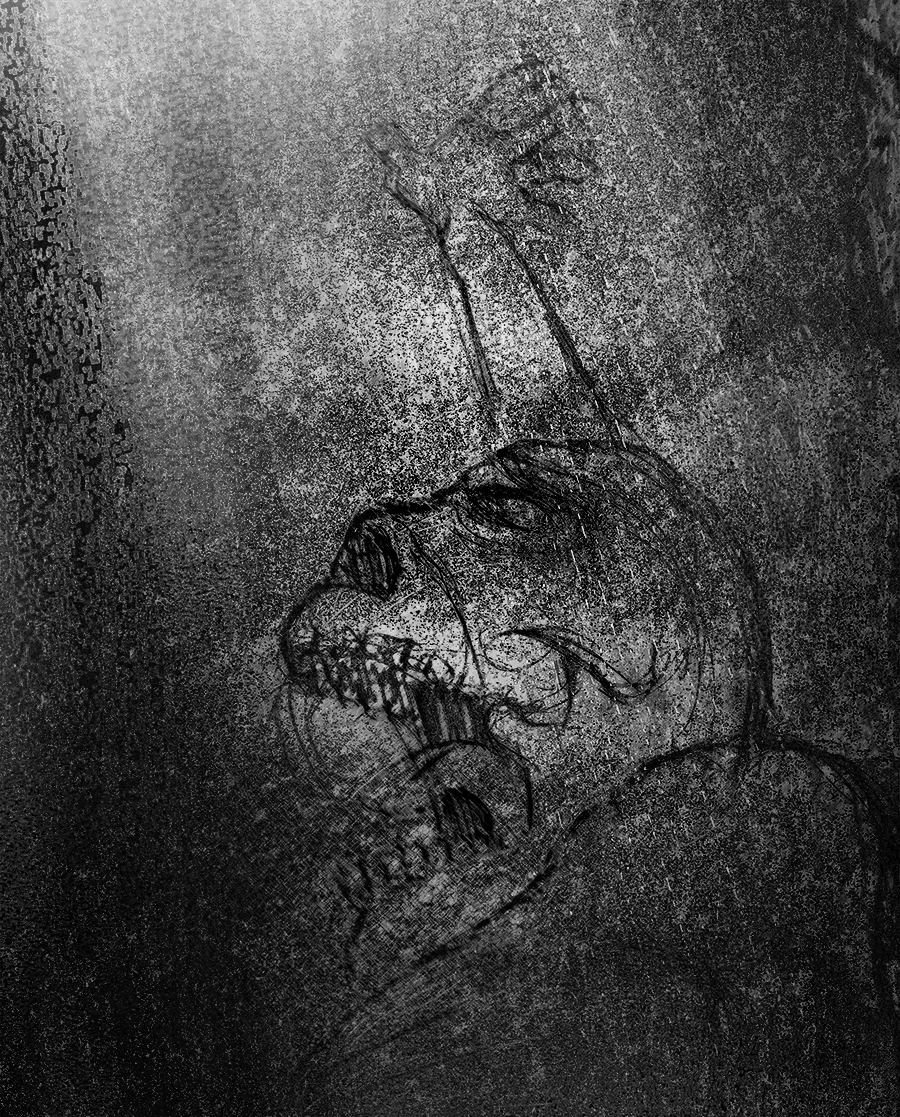
Excrement
Oh Lord, why do you churn out
the sick, the orphans, the starving,
the homeless and drunkards, junkies,
the heathens and sodomites, plotters,
barricaders and the majority? –
create finally in Your likeness!
![]()
Екскремент
О Господи, нащо плодиш
хворих, сиріт, голодних,
бездомних і п’яниць, наркоманів,
безбожників й содомітів, інтриганів,
барикадників та більшість? –
сотвори врешті Свою подобу!
Original poem by TARAS MATVIIV
Translation by TETIANA ALEKSINA
© All rights reserved 2020
TATI’s & TONY’s DEAD POET TOUR // Since Then by Madison Julius Cawein
I found myself among the trees
What time the reapers ceased to reap;
And in the sunflower-blooms the bees
Huddled brown heads and went to sleep,
Rocked by the balsam-breathing breeze.
I saw the red fox leave his lair,
A shaggy shadow, on the knoll;
And tunneling his thoroughfare
Beneath the soil, I watched the mole
Stealth’s own self could not take more care.
I heard the death-moth tick and stir,
Slow-honeycombing through the bark;
I heard the cricket’s drowsy chirr,
And one lone beetle burr the dark
The sleeping woodland seemed to purr.
And then the moon rose: and one white
Low bough of blossoms grown almost
Where, ere you died, ’twas our delight
To meet, dear heart! I thought your ghost…
The wood is haunted since that night.
by MADISON JULIUS CAWEIN (1865-1914)
Public Domain Poetry
Tumblevision #33
WORDS LIVE ON // Ihor Mysiak
Down through the ages, Russia has tried to kill the Ukrainian identity. They have done everything to present Ukraine as the rural outskirts of the ‘great, educated and advanced’ Russian empire. But the ones who proclaimed themselves enlighteners were merely butchers, murderers. They did everything they could to erase Ukrainian culture, traditions, and even the Ukrainian language itself.
And they are still doing this, even now, literally. During the last eleven years of war, Russia has killed hundreds of people of literature. Writers, poets, translators, editors, publishers and librarians. Ukrainian men and women. As you read these words, others are left to disappear in an unread draft forever.
There is a project called ‘Nedopysani‘ (‘Unfinished‘ in English). It’s a memorial site for people of literature who will never be able to put that final dot in their notebook, who will never be able to take into their hands their first published book. And so, this is our hard and painful mission. This is what we must do for them. It is inevitable.
Today, we present the next instalment of our translation series, ‘Words Live On’. We have done our best, and we hope that it will speak to our Dear Readers in a way that cold, clinical war statistics cannot.
Glory to Ukraine! To our heroes — glory!
![]()
Saltern (to Drohobych)
This is not like dawdling in a bookstore,
looking for the seen and unseen for ages,
look, at this saltern
nobody memorises poems about winter.
There’s stillness, but for wintering
even this is not enough of course,
how do you feel standing near the building
that is older than your entire city…
While the noble trees burn,
crackling beneath the pots,
winter goes slowly to the last stop,
and then what will happen to us?
What will happen? Or is everything in vain?
Snow has dwindled, like guests at the end of a wedding,
how do you feel being at the saltern?
How do you feel being the salt?
![]()
Солеварня (Дрогобичу)
Це тобі не сидіти в книгарні,
вічно шукати зриме й незриме,
подивися, на цій солеварні
ніхто не знає віршів про зиму.
Тут є спокій та для зимівлі
і цього не достатньо звісно,
як тобі стояти біля будівлі,
яка старша за твоє місто…
Доки горять благородні дерева,
потріскуючи під казанами,
зима повільно йде на кінцеву,
і що тоді буде з нами?
Що тоді буде? Чи все намарно?
Снігу, як гостей в кінці весілля,
як тобі бути на солеварні?
Як тобі бути сіллю?
Original poem by IHOR MYSIAK
Translation by TETIANA ALEKSINA
© All rights reserved 2020