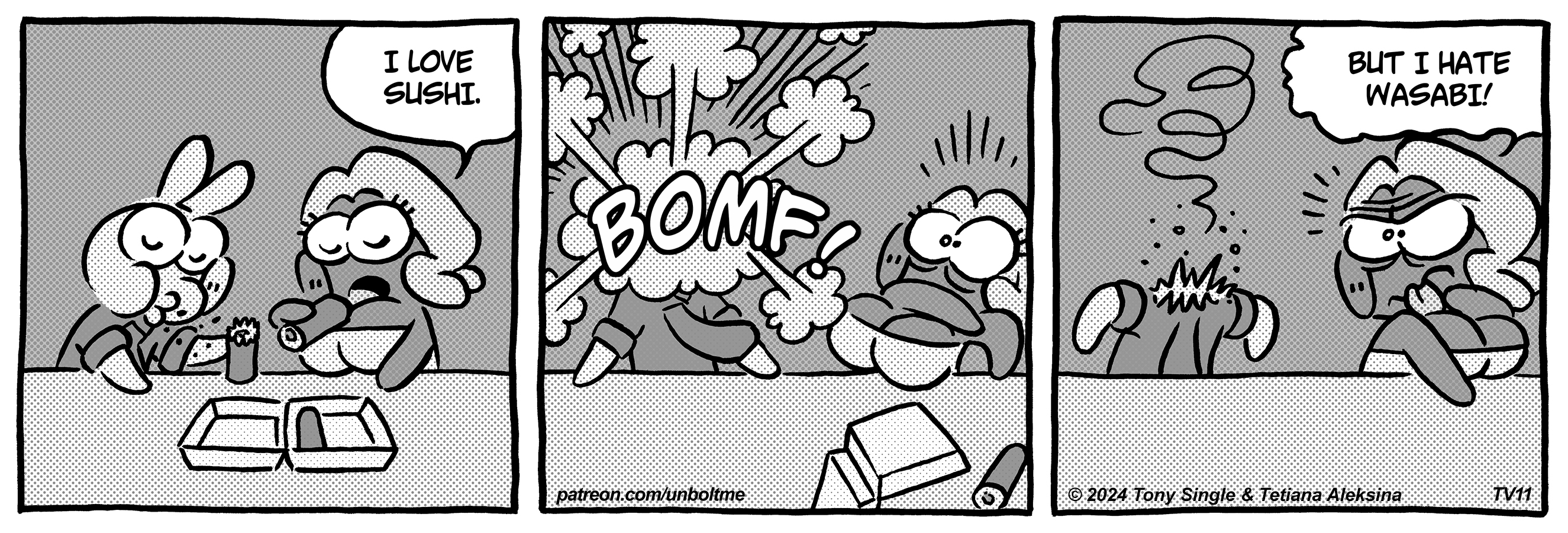
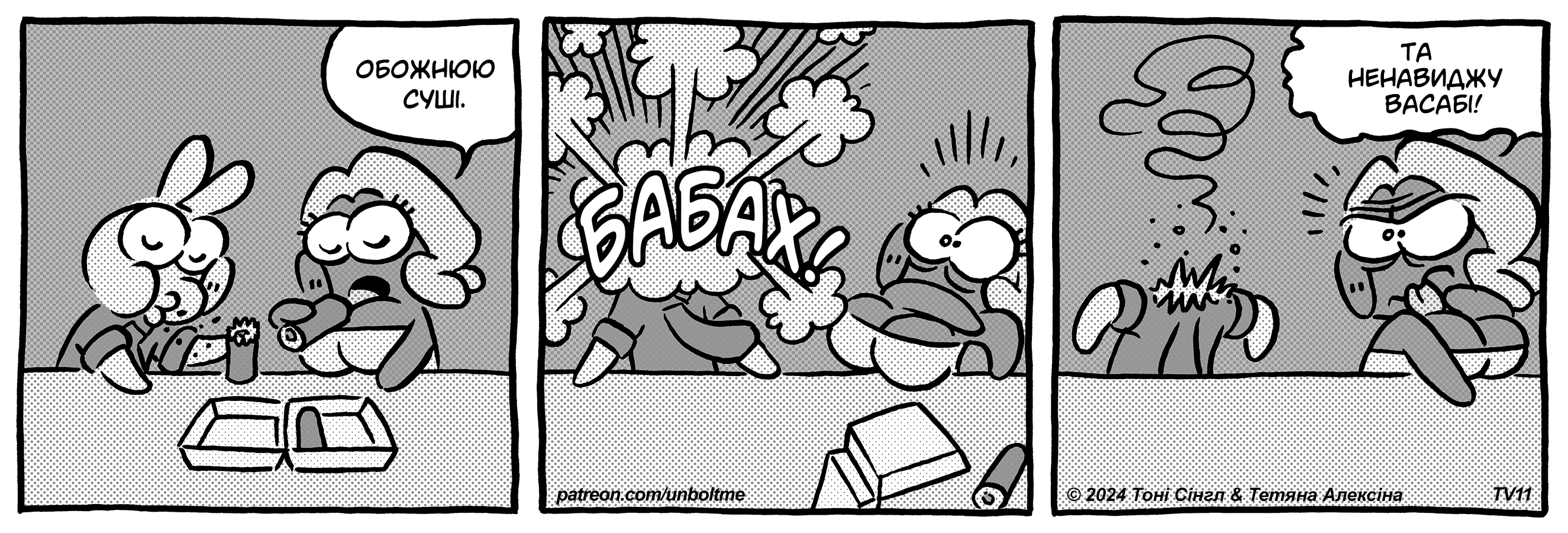
You can find TROTTERSVILLE #1 here > Ba Dum Tish!
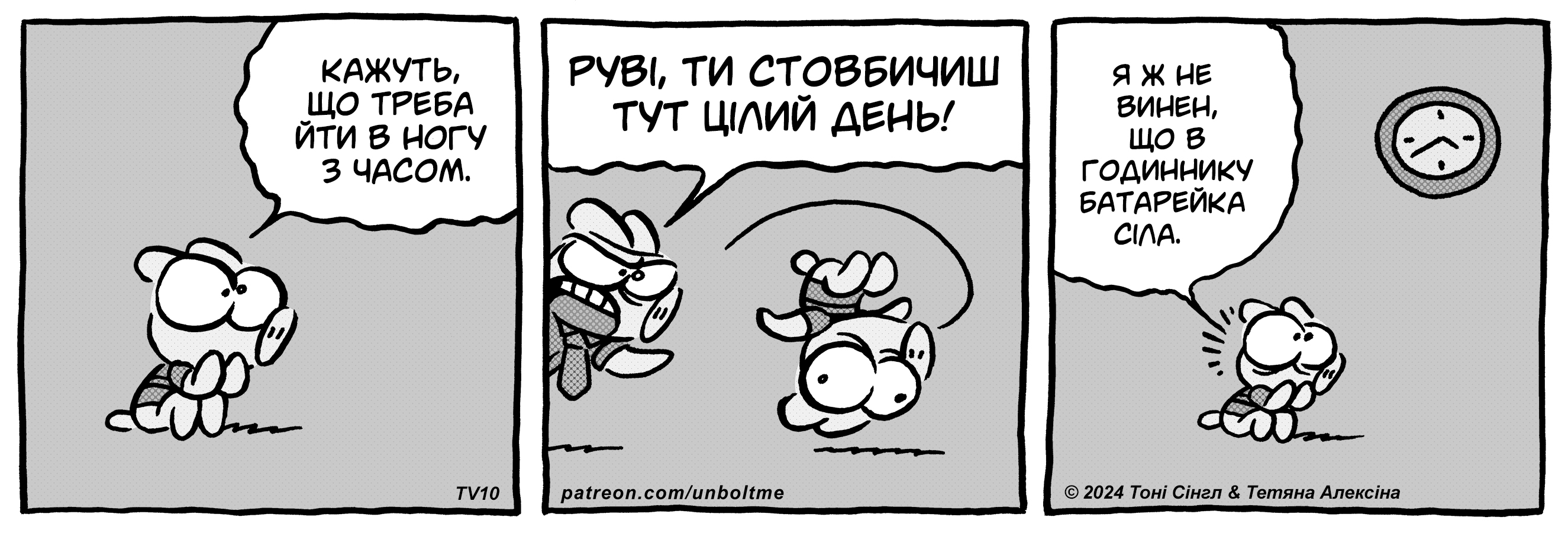
by TONY SINGLE & TETIANA ALEKSINA
© All rights reserved 2024




You can find TROTTERSVILLE #1 here > Ba Dum Tish!
by TONY SINGLE & TETIANA ALEKSINA
© All rights reserved 2024

Literary classics aren’t always created by the greying elder statesmen and women of the writing world. You know the ones. They’re all wise and wrinkly and impassive, and woe betide the scholar who dares mount an honest critique of their bodies of work.
You see, literary classics are also written by upstart youngsters. These youngsters are full of vitality and creativity. They live fully awake and fully aware during these very difficult times. Nothing escapes their notice and they’re unafraid to share what they really think. They walk among us right now, breathing, smiling and crying, loving and hating, experiencing the full range of their humanity without apology.
This series presents names that you won’t find in textbooks or on Wikipedia, but these are the very youngsters who are creating modern Ukrainian literature right now. Trust us, you will want to check them out because it’s only a matter of time before they become household names. When we go back to these writers in two hundred years, we have no doubt that they’ll be mentioned in the same breath as luminaries such as Taras Shevchenko and Lesya Ukrainka.

Untitled
when
you were here
and sang a song
then my heart didn’t fester either
and this pretty flower
i didn’t let wither
but then
someone made a big smoke here
and everything turned rancid
and your throat became parched
and there is no song anymore
and the heart rots
and i don’t look at the pretty flower
oh a serene night above the river
that was always full with crickets
now you smell of gasoline
and there’s no way to chase you away from me
Без назви
коли
ти була тут
і співала пісню
то і серце мені не гноїлось
і гарній квітці
я не дозволяв прив’янути
а потім
хтось тут зчинив великий дим
і вигіркло все
і горло твоє пересохло
і пісні більше нема
і серце гноїться
і на квітку гарну не дивлюсь
о тиха ніч над річкою
що завше повнилась цвіркунами
тепер ти пахнеш бензином
і не відженеш тебе ніяк від себе
Original poem by VOLODYMYR KAUFMAN
Translation by TETIANA ALEKSINA
© All rights reserved 2024
Literary classics aren’t always created by the greying elder statesmen and women of the writing world. You know the ones. They’re all wise and wrinkly and impassive, and woe betide the scholar who dares mount an honest critique of their bodies of work.
You see, literary classics are also written by upstart youngsters. These youngsters are full of vitality and creativity. They live fully awake and fully aware during these very difficult times. Nothing escapes their notice and they’re unafraid to share what they really think. They walk among us right now, breathing, smiling and crying, loving and hating, experiencing the full range of their humanity without apology.
This series presents names that you won’t find in textbooks or on Wikipedia, but these are the very youngsters who are creating modern Ukrainian literature right now. Trust us, you will want to check them out because it’s only a matter of time before they become household names. When we go back to these writers in two hundred years, we have no doubt that they’ll be mentioned in the same breath as luminaries such as Taras Shevchenko and Lesya Ukrainka.
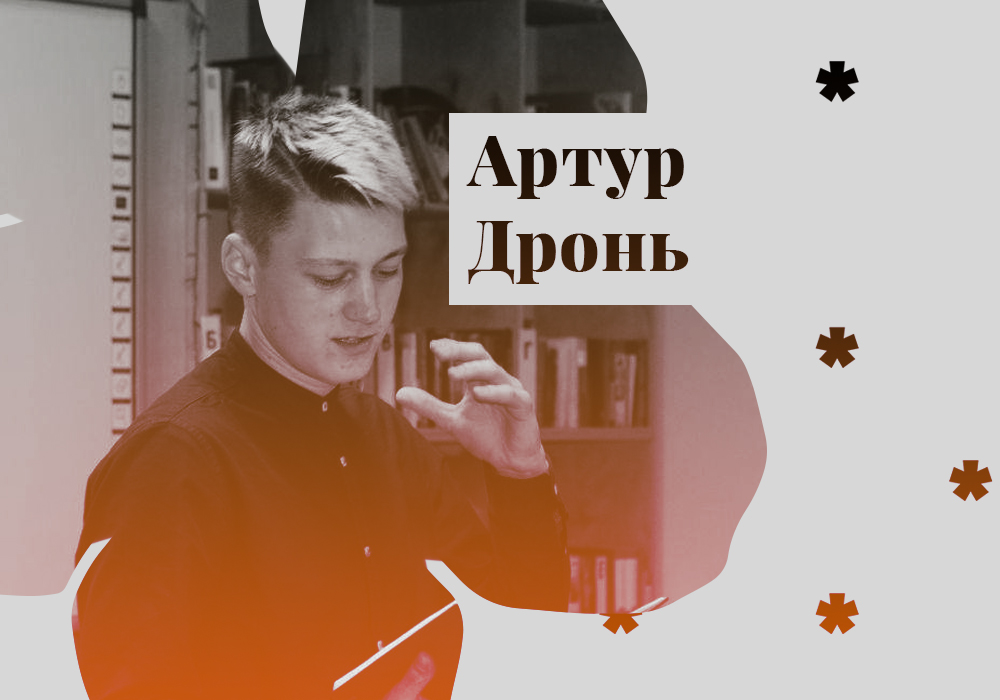
Izium’s eucharist
“…this is My Body, which is broken for you for the remission of sins”
From The Divine Liturgy
***
These are our bodies,
which are broken for us.
But not the remission of sins.
These are our bodies,
which, sometimes, break so easily,
when they are pulled out of the ground.
Here are our forests, and here – our crosses.
And these are the bodies,
which are broken only for us.
Now You see clearly:
we are like your Son.
But not the remission of sins.
Look:
the very same bones piercing through,
the very same blood and water.
But not the remission of sins.
Hear:
the very same scream, the very same silence.
This is how it looks like
Izium’s eucharist.
Here are our forests, and here – our crosses,
and the live unbury the dead and say:
these are our bodies, these are our very bodies.
We are so like your Son.
These are our bodies, look, these are our very bodies.
We have long been like your Son.
So many bodies, look, so many bodies.
We are – your younger Son,
who will grant no one
the remission.
Ізюмське причастя
«…це є Тіло Моє, що за вас ламається на відпущення гріхів»
З тексту Божественної літургії
***
Це є тіла наші,
що за нас ламаються.
Але жодного відпущення гріхів.
Це є тіла наші,
що, буває, так легко ламаються,
коли їх витягують з-під землі.
Тут наші ліси, а тут – наші хрести.
А це є тіла,
що тільки за нас ламаються.
Тепер добре бачиш:
ми як твій син.
Тільки жодного відпущення гріхів.
Дивись:
ті ж кістки виходять назовні,
та ж кров і вода.
Але жодного відпущення гріхів.
Слухай:
той самий крик, те саме мовчання.
Так виглядає
Ізюмське причастя.
Тут наші ліси, а тут – наші хрести,
а живі викопують мертвих і говорять:
це наші тіла, це ж наші тіла.
Ми такі схожі на твого сина.
Це наші тіла, подивися, це ж наші тіла.
Ми вже давно як твій син.
Стільки тіл, подивись, стільки тіл.
Ми – твій молодший син,
який нікому цього
не відпустить.
Original poem by ARTUR DRON
Translation by TETIANA ALEKSINA
© All rights reserved 2024
You can find TROTTERSVILLE #1 here > Ba Dum Tish!
by TONY SINGLE & TETIANA ALEKSINA
© All rights reserved 2024

Literary classics aren’t always created by the greying elder statesmen and women of the writing world. You know the ones. They’re all wise and wrinkly and impassive, and woe betide the scholar who dares mount an honest critique of their bodies of work.
You see, literary classics are also written by upstart youngsters. These youngsters are full of vitality and creativity. They live fully awake and fully aware during these very difficult times. Nothing escapes their notice and they’re unafraid to share what they really think. They walk among us right now, breathing, smiling and crying, loving and hating, experiencing the full range of their humanity without apology.
This series presents names that you won’t find in textbooks or on Wikipedia, but these are the very youngsters who are creating modern Ukrainian literature right now. Trust us, you will want to check them out because it’s only a matter of time before they become household names. When we go back to these writers in two hundred years, we have no doubt that they’ll be mentioned in the same breath as luminaries such as Taras Shevchenko and Lesya Ukrainka.
the last letter to K
dear friend,
i miss
your dreams come no more
to me in reality.
if you knew
how many fates were twisted,
smoked away, half-eaten by dogs
how many letters gather dust in mailboxes
concolourous with dried blood
and how many vows left behind only poetries
somewhere in the bowels of my telegram.
i am much the same as usual
outside the window are the crooked teeth of apartments
with leftovers of the staled unsaid
just got more quiet
it nestles on my knees, purrs,
eats away all my hunger
and i feel the thirst for life no more.
dear friend,
god turns off the light
sleep, i will carry your love protest
i will carry your hate
i will carry your sexual desire
depart with ease
let your fear continue hereafter
suffocate in oblivion.
останній лист до К
милий друже,
я сумую
твої сни уже більше не проходять
до мене на яву.
знав би ти
скільки доль скручено,
скурено, виїдено собаками
скільки листів запилюжені у скринях
кольору засохлої крові
і від скількох клятв залишились лиш вірші
десь у надрах мого телеграму.
у мене ж усе так само
за вікном нерівні зуби квартир
із недоїдками закипілої недосказаності
лише от більше спокою
він моститься у мене на колінах, муркотить,
з’їдає мій весь голод
і я уже не відчуваю спрагу до життя.
любий друже,
бог вимикає світло
засинай, я берегтиму твій протест любові
я берегтиму твою ненависть
я берегтиму твоє сексуальне бажання
помирай спокійно
нехай твій страх і надалі
задихається у забутті.
Original poem by DARII LAZHNEVSKYI
Translation by TETIANA ALEKSINA
© All rights reserved 2024




 unbolt me