TATI’S TRANSLATIONS // Young Ukrainian Poets: Anna Yutchenko

IMPORTANT NOTE: While we were working on our translation of the following poems, we learned that Anna (its author) is originally from Poltava. She has family there, and on the 1st February her aunt was killed when the Russian bastards hit yet another residential building. Yes, it has been almost three years and still there is a war. It should be beyond any doubt that Russia is a terrorist state and that Putin is a war criminal. We implore our readers to stand with Ukraine and help end this tyranny once and for all.

Literary classics aren’t always created by the greying elder statesmen and women of the writing world. You know the ones. They’re all wise and wrinkly and impassive, and woe betide the scholar who dares mount an honest critique of their bodies of work.

You see, literary classics are also written by upstart youngsters. These youngsters are full of vitality and creativity. They live fully awake and fully aware during these very difficult times. Nothing escapes their notice and they’re unafraid to share what they really think. They walk among us right now, breathing, smiling and crying, loving and hating, experiencing the full range of their humanity without apology.

This series presents names that you won’t find in textbooks or on Wikipedia, but these are the very youngsters who are creating modern Ukrainian literature right now. Trust us, you will want to check them out because it’s only a matter of time before they become household names. When we go back to these writers in two hundred years, we have no doubt that they’ll be mentioned in the same breath as luminaries such as Taras Shevchenko and Lesya Ukrainka.

White flowers (series)selected poems

time stopped inside the body
like air
in a punched ball
that was left by a boy in a yard
before the shelling of his house
*
my heart is
a yellow butterfly
that flutters around
the emptied street
to the sounds of a siren
like it is music
*
war peace
peace war
and what is between?
i see white flowers sprout
*
every time when pain
becomes unbearable
look at this white flower
and then at another one
and the one behind
they are here to give you
all the best they have gotten to know
from water sun and wind

Білі квіти (цикл) – обрані поезії

час у тілі зупинився
як повітря
у пробитому м’ячику
який лишив хлопчик у дворі
перед обстрілом свого дому
*
моє серце це
жовтий метелик
що кружляє по
спорожнілій вулиці
під звуки сирени
так ніби то музика
*
війна мир
мир війна
а поміж що?
бачу білі квіти проростають
*
щоразу як біль
стає нестерпним
поглянь на цю білу квітку
а потім на іншу
і ту що за нею
вони тут щоб віддати тобі
все найкраще що пізнали
з води сонця і вітру

Original poems by ANNA YUTCHENKO
Translation by TETIANA ALEKSINA

© All rights reserved 2025

snow, blood, shit

better you don’t enter
the unreal forest
better don’t be tempted
with shrieking mavka’s ballads

stop & look around
the boat that carried you here
’tis a moored coffin
‘tween picturesque shores

the winter this year
is temperate
the spirits this winter
are hungry
the bodies cover the trails
the blood covers the bodies
as ai verisimilar
as your best nightmare

better you don’t enter
the unreal forest
better don’t be tempted
with shrieking mavka’s ballads

stop & look around
stop & look around
gaiman is watching you
he’s fucking watching

by TETIANA ALEKSINA
© All rights reserved 2025

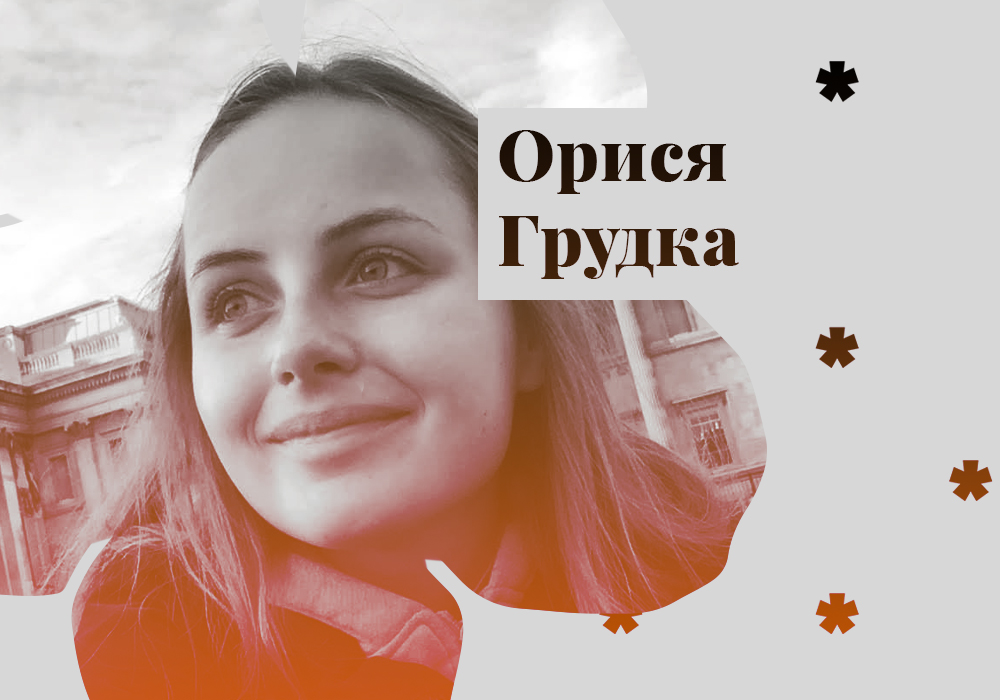
TATI’S TRANSLATIONS // Young Ukrainian Poets: Orysia Hrudka

Literary classics aren’t always created by the greying elder statesmen and women of the writing world. You know the ones. They’re all wise and wrinkly and impassive, and woe betide the scholar who dares mount an honest critique of their bodies of work.

You see, literary classics are also written by upstart youngsters. These youngsters are full of vitality and creativity. They live fully awake and fully aware during these very difficult times. Nothing escapes their notice and they’re unafraid to share what they really think. They walk among us right now, breathing, smiling and crying, loving and hating, experiencing the full range of their humanity without apology.

This series presents names that you won’t find in textbooks or on Wikipedia, but these are the very youngsters who are creating modern Ukrainian literature right now. Trust us, you will want to check them out because it’s only a matter of time before they become household names. When we go back to these writers in two hundred years, we have no doubt that they’ll be mentioned in the same breath as luminaries such as Taras Shevchenko and Lesya Ukrainka.

That Cossack had not any trace of a wound on himself,
only happened in childhood to prick the skin of his fingertips:
with a needle, which followed by a red thread of blood,
it stitched finely, drew nicely,
tightened well.
He was a noble Cossack. But had chosen a delicate job:
instead of cleaving enemies he stitched the cleaved ones
alive through living flesh for the sake of life.

He saw the little things and could lessen them to a handful.
He noticed, how lungs released their final air,
like they opened with an inhale and raised a soul to the sky —
he looked, like it was a dim drop of himself.

Sometimes he observed, how in a moment before a bullet pierces a body
the third eye opened and watched impassively,
how the air trembled from the bullet’s motion.

Той козак не мав на собі рани ані сліду,
тільки траплялося в дитинстві вколоти на пучках шкіру:
голкою, за якою тягнулась червона нитка крові,
вишивала дрібно, малювала добірно,
стягувала добротно.
Славним був козаком. Але вибрав тоншу роботу:
замість тяти ворога зашивав потятих
живих по живому життя заради.

Бачив дрібне і вмів змаліти до жмені.
Помічав, як останнє повітря випускали легені,
як із вдихом розправлялись і підносили душу до неба —
дивився, ніби в мутну краплину зі себе.

Іноді зауважував, як за мить до входження кулі в тіло
розплющувалося третє око і незворушно дивилося,
як від руху кулі повітря тремтіло.

Original poem by ORYSIA HRUDKA
Translation by TETIANA ALEKSINA

© All rights reserved 2024

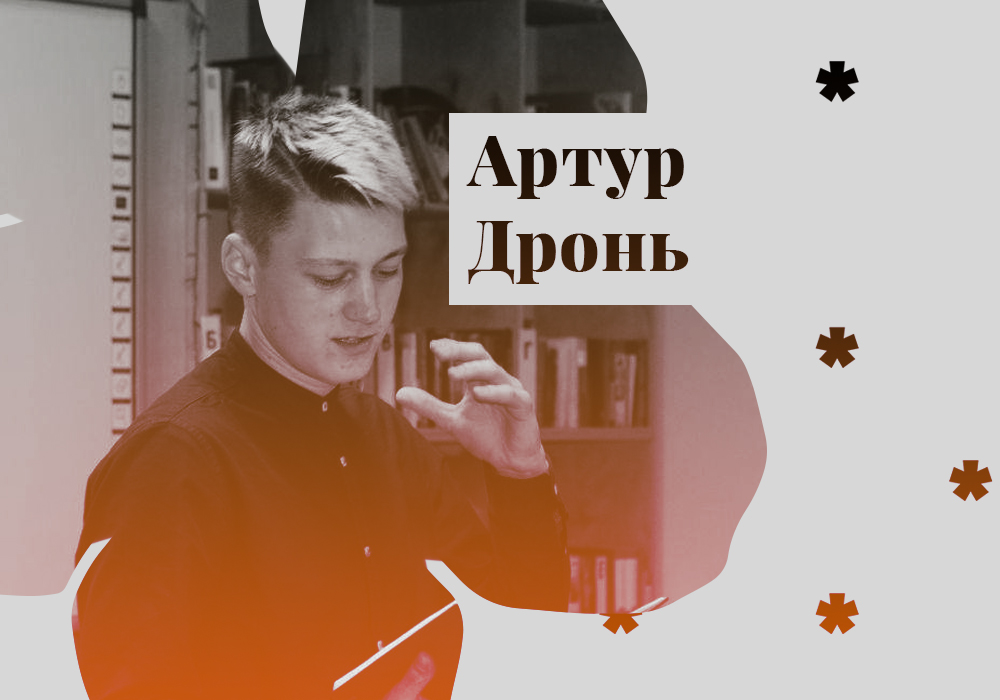
TATI’S TRANSLATIONS // Young Ukrainian Poets: Artur Dron

Literary classics aren’t always created by the greying elder statesmen and women of the writing world. You know the ones. They’re all wise and wrinkly and impassive, and woe betide the scholar who dares mount an honest critique of their bodies of work.

You see, literary classics are also written by upstart youngsters. These youngsters are full of vitality and creativity. They live fully awake and fully aware during these very difficult times. Nothing escapes their notice and they’re unafraid to share what they really think. They walk among us right now, breathing, smiling and crying, loving and hating, experiencing the full range of their humanity without apology.

This series presents names that you won’t find in textbooks or on Wikipedia, but these are the very youngsters who are creating modern Ukrainian literature right now. Trust us, you will want to check them out because it’s only a matter of time before they become household names. When we go back to these writers in two hundred years, we have no doubt that they’ll be mentioned in the same breath as luminaries such as Taras Shevchenko and Lesya Ukrainka.

Izium’s eucharist

“…this is My Body, which is broken for you for the remission of sins”
From The Divine Liturgy

***
These are our bodies,
which are broken for us.
But not the remission of sins.

These are our bodies,
which, sometimes, break so easily,
when they are pulled out of the ground.

Here are our forests, and here – our crosses.
And these are the bodies,
which are broken only for us.

Now You see clearly:
we are like your Son.
But not the remission of sins.
Look:
the very same bones piercing through,
the very same blood and water.
But not the remission of sins.
Hear:
the very same scream, the very same silence.

This is how it looks like
Izium’s eucharist.
Here are our forests, and here – our crosses,
and the live unbury the dead and say:
these are our bodies, these are our very bodies.
We are so like your Son.
These are our bodies, look, these are our very bodies.
We have long been like your Son.
So many bodies, look, so many bodies.
We are – your younger Son,
who will grant no one
the remission.

Ізюмське причастя

«…це є Тіло Моє, що за вас ламається на відпущення гріхів»
З тексту Божественної літургії

***
Це є тіла наші,
що за нас ламаються.
Але жодного відпущення гріхів.

Це є тіла наші,
що, буває, так легко ламаються,
коли їх витягують з-під землі.

Тут наші ліси, а тут – наші хрести.
А це є тіла,
що тільки за нас ламаються.

Тепер добре бачиш:
ми як твій син.
Тільки жодного відпущення гріхів.
Дивись:
ті ж кістки виходять назовні,
та ж кров і вода.
Але жодного відпущення гріхів.
Слухай:
той самий крик, те саме мовчання.

Так виглядає
Ізюмське причастя.
Тут наші ліси, а тут – наші хрести,
а живі викопують мертвих і говорять:
це наші тіла, це ж наші тіла.
Ми такі схожі на твого сина.
Це наші тіла, подивися, це ж наші тіла.
Ми вже давно як твій син.
Стільки тіл, подивись, стільки тіл.
Ми – твій молодший син,
який нікому цього
не відпустить.

Original poem by ARTUR DRON
Translation by TETIANA ALEKSINA

© All rights reserved 2024

TATI’S TRANSLATIONS // Young Ukrainian Poets: Darii Lazhnevskyi

Literary classics aren’t always created by the greying elder statesmen and women of the writing world. You know the ones. They’re all wise and wrinkly and impassive, and woe betide the scholar who dares mount an honest critique of their bodies of work.

You see, literary classics are also written by upstart youngsters. These youngsters are full of vitality and creativity. They live fully awake and fully aware during these very difficult times. Nothing escapes their notice and they’re unafraid to share what they really think. They walk among us right now, breathing, smiling and crying, loving and hating, experiencing the full range of their humanity without apology.

This series presents names that you won’t find in textbooks or on Wikipedia, but these are the very youngsters who are creating modern Ukrainian literature right now. Trust us, you will want to check them out because it’s only a matter of time before they become household names. When we go back to these writers in two hundred years, we have no doubt that they’ll be mentioned in the same breath as luminaries such as Taras Shevchenko and Lesya Ukrainka.

the last letter to K

dear friend,
i miss
your dreams come no more
to me in reality.

if you knew
how many fates were twisted,
smoked away, half-eaten by dogs
how many letters gather dust in mailboxes
concolourous with dried blood
and how many vows left behind only poetries
somewhere in the bowels of my telegram.

i am much the same as usual
outside the window are the crooked teeth of apartments
with leftovers of the staled unsaid
just got more quiet
it nestles on my knees, purrs,
eats away all my hunger
and i feel the thirst for life no more.

dear friend,
god turns off the light
sleep, i will carry your love protest
i will carry your hate
i will carry your sexual desire
depart with ease
let your fear continue hereafter
suffocate in oblivion.

останній лист до К

милий друже,
я сумую
твої сни уже більше не проходять
до мене на яву.

знав би ти
скільки доль скручено,
скурено, виїдено собаками
скільки листів запилюжені у скринях
кольору засохлої крові
і від скількох клятв залишились лиш вірші
десь у надрах мого телеграму.

у мене ж усе так само
за вікном нерівні зуби квартир
із недоїдками закипілої недосказаності
лише от більше спокою
він моститься у мене на колінах, муркотить,
з’їдає мій весь голод
і я уже не відчуваю спрагу до життя.

любий друже,
бог вимикає світло
засинай, я берегтиму твій протест любові
я берегтиму твою ненависть
я берегтиму твоє сексуальне бажання
помирай спокійно
нехай твій страх і надалі
задихається у забутті.

Original poem by DARII LAZHNEVSKYI
Translation by TETIANA ALEKSINA

© All rights reserved 2024